What’s behind the increased frequency and cost of equipment breakdown claims
Aging infrastructure, increasingly sophisticated equipment, and mounting cost pressures are inflating both the frequency and severity of equipment breakdown claims, an HSB Canada exec tells Canadian Underwriter.
And that will change the conversations brokers need to have with commercial clients, says Tammy Parris, HSB Canada’s assistant vice president of corporate underwriting and product owner of equipment breakdown.
She tells CU equipment breakdown claims have increased by single-digit percentages year-over-year across both personal and commercial lines, while the cost of resolving those claims continues to climb. In commercial lines, boiler and machinery coverage applies to factory manufacturing equipment, HVAC, and business interruption, while in personal lines it covers home appliances, HVAC systems, and electronics.
“We’re seeing more claims overall, and the cost in resolving these claims is also rising,” Parris says, citing higher repair costs, more expensive replacement parts, labour shortages, and increasing business downtime.
Older equipment is naturally becoming more susceptible to failure as components deteriorate.
Newer equipment presents a different challenge. As systems become increasingly sophisticated, they’re often more difficult to diagnose and repair, extending downtime and increasing claims costs.
Inflation, skilled labour shortages, power quality issues, refrigerant regulations, tariffs, and global supply chain disruptions are also driving repair costs higher. Meanwhile, greater automation is introducing new cyber-related exposures.
“The combination of all that is affecting both the severity and the frequency,” Parris says.
Automation creates new exposures
One of the biggest shifts is the growing connection between equipment breakdown and cyber risk.
As manufacturers and commercial property owners increasingly rely on automated systems to address labour shortages, more equipment is connected through electronic controls that can themselves become points of failure.
Parris points to the example of a computer-controlled dough mixer. If a cyberattack compromises the system’s controls, causing the mixer to malfunction and sustain physical damage, the resulting damage, spoiled product, business interruption, and extra expense may all fall within equipment breakdown coverage.
Manufacturers’ growing reliance on automation has expanded those exposures, she says, while creating additional opportunities for cyber criminals targeting operational technology.
Critical systems mean larger losses
Steam and gas turbines, generators, production machinery, and HVAC systems are among the equipment generating increased claims activity. Because these assets often support entire operations or buildings, a single breakdown can quickly escalate into a significant property and business interruption loss.
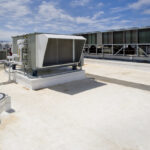
Parris cites the example of a rooftop HVAC unit serving an apartment building. An electrical failure can leave an entire building without air conditioning during a heat wave while generating repair costs, temporary accommodation expenses, and other additional costs.
Real estate risks, including office buildings and apartment and condominium properties, hotels, power generating stations, food retailers and machine shops, are among the occupancies generating significant equipment breakdown activity because they rely heavily on critical equipment to maintain operations.
Data centres present emerging challenges
Data centres are another rapidly evolving equipment breakdown exposure, Parris says.
HSB Canada is working closely with its U.S. engineering teams to better understand the risks associated with backup generators, chillers, electrical infrastructure, and other systems keeping data centres operating.
“There are very complex equipment breakdown exposures in data centres that I don’t think a lot of the industry is totally aware of yet,” she says.
To better understand those risks, HSB conducts pre-quote engineering surveys, reviews existing monitoring systems, and works with clients to identify opportunities to prevent losses before coverage is bound.
Diagnosing failures is becoming more difficult
Modern electronic equipment is also making claims more difficult to investigate.
Electronic circuitry impairment coverage recognizes that failures are not always immediately visible.
“If it’s a speck of dust on a teeny tiny little motherboard that caused a failure, we’re going to cover that,” Parris says, noting those types of losses often require engineers, manufacturers, and technical specialists to identify the cause before repairs can proceed.
Prevention takes on greater importance
Rather than simply responding to losses, HSB Canada is increasingly emphasizing prevention.
Parris says the insurer’s engineering and inspection teams identify maintenance gaps, hazardous conditions and operational issues before they become claims, while helping insureds improve equipment reliability and reduce downtime.
The insurer is also investing in predictive monitoring technology.
Also in the news: Why Intact CEO views elevated Q2 Cat losses as an ‘anomaly’
At HSB Canada’s offices in Toronto, water and temperature sensors monitor the building for early signs of leaks and temperature changes. The company tracks internally how much the technology has saved the landlord by detecting problems before they become larger losses. HSB has not publicly released those figures, but Parris says the experience reinforces the insurer’s confidence that sensors can significantly reduce equipment breakdown losses.
“We think it’s critical,” she says. “As soon as that sensor goes off, people are notified right away and action can be taken quickly to prevent a larger loss.”
Broker conversations changing
Parris says brokers should be placing greater emphasis on business interruption and extra expense coverage during policy reviews.
Business interruption and extra expense coverage are becoming increasingly important as repair times lengthen and replacement equipment becomes harder to source. Temporary generators, replacement equipment, fuel costs, and prolonged repairs can quickly exhaust inadequate limits, she says.
She also encourages brokers to discuss aging HVAC systems with commercial clients, particularly where older refrigerants remain in use.
Under the Canadian Environmental Protection Act, 1999, the use, refill, and servicing of Class I ozone-depleting substances — including refrigerants R11, R12, R13 and R22 — is prohibited. If those systems fail, replacing rather than simply refilling them can significantly increase claim costs.
As equipment becomes more connected, expensive, and difficult to replace, brokers have a growing role in helping commercial clients manage not only equipment breakdown coverage, but also business interruption, extra expense, and loss prevention strategies, Parris says.
“The risks are becoming more complex and costly,” she says. “We encourage brokers to stay close to their clients.”