Manitoba campground owner expects closure of 24 campsites due to flooding
A campground owner is complaining about high water levels near the Shellmouth Dam that are expected to force the closure of roughly 24 of his campsites as the busy season kicks off.
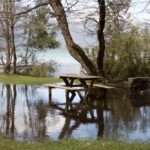
Lake of the Prairies is roughly six feet higher than the province’s target for the summer. The reservoir has been raised due to high water intake this spring — and that has left a row of electrical hookups standing in water at Pyotts West Campground.
The owners, Jason and Jodi Digby, said the water is impacting their business because patrons would have to park in water to use the lakefront sites.
“We’ve got people wanting to come, and not coming because they can’t get their spots,” Jodi said in a phone interview with the Sun on Friday.
“Once we get to around the 10th or 12th of June, about half of our reservations, I’m going to have to either call them and make other arrangements, or tell them that I don’t have spots for them.”
The campground, located southwest of Roblin on the west side of the lake, has access to less than half of its 45 daytime camping sites with current lake levels — at about 1,409 feet above sea level.
With some of their campground underwater, Jason and Judi are currently managing the business on their feet, they said.
Jodi moved some reservations up to higher ground, but said at least one group has promised to cancel if they cannot get their annual lakeside spot, which is currently flooded.
“When we lose a customer, there’s the possibility that they might not come back next year,” Jason said. “On most years we have boat parking, and we’ll have 50 boats parked here. Now there’s essentially room for maybe 10.”
The campground expects to lose between $40,000 and $100,000 in revenue this year if its campground remains flooded. The losses would come from a lack of store sales, food sales and campground fees.
Brokers need to specialize. But where should they focus?
By
Sponsor ImageJason said he believes that the province’s damming decisions are imbalanced — protecting farmer’s business downstream at the expense of his. He said the high reservoir level is a demonstration of how the province is putting farmers first.
“When our income is affected so that we can save the farmer’s income, that’s when I have an issue with it,” he said.
“When it’s to protect another industry, and our industry gets shafted, then that’s not OK.”
The provincial government did not respond to Jason’s claim about prioritizing farmers, but noted that dam operations are “intended to balance multiple objectives, including downstream flood mitigation, water supply, environmental considerations and upstream interests.”
The dam is dealing with one of the highest inflow volumes on record due to water from Saskatchewan and the upper Assiniboine River Basin in Manitoba — and water levels are expected to remain high at least until mid-June, a provincial spokesperson said on Friday.
The normal target for the reservoir is near 1,403 feet above sea level after the spring thaw is over and onward through the summer.
As of Friday, the lake was 1,409.5 feet above sea level. It is expected remain that high through the end of June under wet conditions, or to drop as low as 1408.7 feet by June 15 under dry conditions.
The dam allows overtopping of the spillway to save crops during May or June if seeding has taken place in the valley, according to the provincial government’s website. The dam will also reduce outflows in that case.
For those affected, information about agricultural insurance and business risk management or emergency support programs can be obtained through the Manitoba Emergency Management Organization or the Manitoba Agricultural Services Corporation, the province noted.
Jason believes it is an “impossibility” that the flooded campsites will be clear in time for busy season in mid-June.
The office of Manitoba Transportation and Infrastructure Minister Lisa Naylor did not respond to a request for comment on Friday.