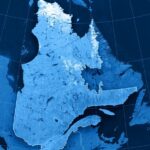
How Quebec flood maps could affect rates, coverage
New Quebec flood zone maps could lead to higher home insurance premiums, coverage limitations and more complex underwriting for flood protection, CAA-Québec warns.
Since March 2026, Quebec’s provincial government has gradually rolled out the new flood maps. These updated maps will have tangible insurance implications for homeowners, condo owners and tenants, CAA-Québec says.
There’s not only a risk of higher insurance premiums, there’s also a possibility that insurance coverage for water damage may no longer be available to people who are now considered to live in flood zones, Suzanne Michaud, CAA Québec’s vice president of insurance, tells Canadian Underwriter.
The new maps could also lead to coverage restrictions.
“We could see restrictions of coverage for specific protections and endorsements, [such] as the ones for backflow of sewage, water damage above ground, flooding, water infiltration through the ground, [and] replacement value,” Michaud says.
Some insurers may also require a check valve, submersible pump, the elevation of equipment such as furnaces and electrical panels, or land development requirements, she adds.
Keep clients informed
How do clients get information on the new flood maps?
Michaud says information is first provided by the Government of Quebec. For now, municipalities and “municipalités regionals de comtés” (MRC – regional county municipalities, or county-like units of government) will receive the first-issued maps. Municipalities and MRCs will then study the maps to be able to answer questions from consumers when the maps are widely released.
“Because it is clear that there will be questions from people who find themselves in the new flood-prone areas,” Michaud says, adding she knows there are “some negotiations with the MRCs and the government about who will be in charge to produce the final version of those maps, because of potential legal effects.”
The Government of Quebec is updating its flood zone mapping to strengthen flood prevention and help communities better manage flood risks. It introduces new regulations and amends existing ones.
The new flood maps differ from the old ones in many ways, Michaud tells CU.
For example, the old maps had two zones based on flood recurrence frequency: 0-20 years (high risk) and 20-100 years (moderate risk). The new mapping is more realistic and easier to understand, considering type of flooding, frequency, water depth and the impact of climate change. It’s broken up into four zones, defined by descriptions and colours, for very high risk, high risk, moderate risk and low risk.
The old maps only considered the probability of flooding, while the new ones consider those likelihoods, as well as depth of water, 25-year frequency and other conditions such as the presence of ice or dams. In addition, the new maps consider historical data, while also taking climate changes into account, and are reviewed every 10 years at a minimum.
National implications
Nationally, Canada’s emergency management minister, Eleanor Olszewski, says she can’t guarantee the government will launch the promised National Flood Insurance Program “in the near future.” Canadian Press reported last week Olszewski told reporters the program is still “top of mind” but it’s complicated to set up.
Liam McGuinty, Insurance Bureau of Canada’s vice president of federal affairs, told CU the federal government continues to engage the P&C industry, provinces and territories on the design of the national program. The work includes exploring how a backstop would function alongside expanded flood coverage by Canada’s private home insurance market, he says.