Will insurers in Canada be able to withstand another destructive wildfire season?
Canada’s insurance sector is being tested by another highly destructive wildfire season, says a new Morningstar DBRS commentary.
Reinsurers are also likely to re-evaluate their Canadian exposure, particularly if climate change causes seasonal wildfire activity to become structurally more severe.
While the Canadian P&C insurance industry remains well capitalized, the increasing frequency and severity of wildfires are “testing the limits of underwriting models and reinsurance strategies,” DBRS authors write.
The 2025 wildfire season will likely be “one of the most destructive on record,” and has already outpaced 2024 and the 10-year average in the same period, DBRS observes.
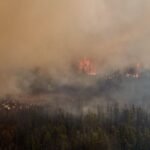
More than 1,800 wildfires have burned over 2.8 million hectares in Manitoba, Saskatchewan, Alberta, and Ontario, causing extensive evacuations. Some infrastructure damage has been reported.
That’s adding pressure to last year’s record-breaking catastrophe losses, which total nearly $9 billion, according to current estimates from Catastrophes Indices and Quantification Inc.
Pressure mounts
Even after several years of disciplined underwriting and rate increases in personal property, DBRS expects further upward pressure on premiums in 2025 and 2026, especially in wildfire-prone regions.
The weight is unevenly distributed across the lines. Commercial business, on the other hand, is experiencing pricing moderation due to greater competition and improved claims experience outside property segments.
Reinsurers are likely to re-evaluate their Canadian exposure.
And in response, insurers are also likely to have increased risk retention to manage reinsurance costs or capacity constraints, which could increase if wildfire remains severe, DBRS suggests.
While improving cost control, this risk retention strategy may expose insurers to greater earnings swings in the short term or capitalization shocks from unexpected events.
“While the 2025 wildfire season remains in progress, current loss trends point toward a similar pattern to 2024, when multiple severe events concentrated in Q3 drove spikes in combined ratios, particularly in personal property lines and especially if reinsurance attachment are exceeded.”
Gaps in coverage
Canada has so far avoided the extreme pricing or coverage gaps seen in California, where property insurers have withdrawn or limited their offerings amid exceptionally high losses.
But, says DBRS, “the Canadian market is showing early signs of coverage tightening for properties near wildland-urban interfaces and exclusionary clauses or stricter underwriting for wildfire risk in high-exposure zones.
“In our view, this retreat may result in a reliance on government-backed schemes to fill the coverage gaps.”
Recurring unprecedented wildfire seasons, particularly in regions previously considered low risk, raise broader questions about insurability, the protection gap, and whether insurance will weather the storm.
Lessons learned
The 2025 wildfire season will likely be another active and costly one for Canadian P&C insurers, DBRS predicts.
However, given the strides the industry’s made in terms of strong capitalization, reinsurance protections, and disciplined underwriting, “we anticipate the industry to be able to absorb this latest wave of losses without a material impact on credit profiles,” the commentary reads.
But “continued repricing, diversification, further investments in wildfire management and infrastructure adaptation will be key to maintaining the insurance market’s financial sustainability and the availability of coverage for vulnerable Canadian communities.”